
Dust Suppression Systems: Implementation and Maintenance Tips
Protect Workers and Equipment from Airborne Dust – Expert Tips from Air Process Systems
March 10, 2026Advanced Air Handling Solutions for Industrial Facilities
May 7, 2026Dust Suppression Systems: Implementation and Maintenance Tips
Industrial environments face constant challenges when it comes to controlling airborne dust. Whether handling bulk materials, operating heavy machinery, or managing high‑volume production, dust can quickly become a safety hazard, a maintenance burden, and a compliance issue. Air Process Systems LLC provides advanced dust suppression solutions designed to encapsulate airborne particles using ultra‑fine mist technology. Their systems improve air quality, reduce equipment wear, and enhance overall operational efficiency. Visit our website for more information.
Understanding How Dust Suppression Systems Work
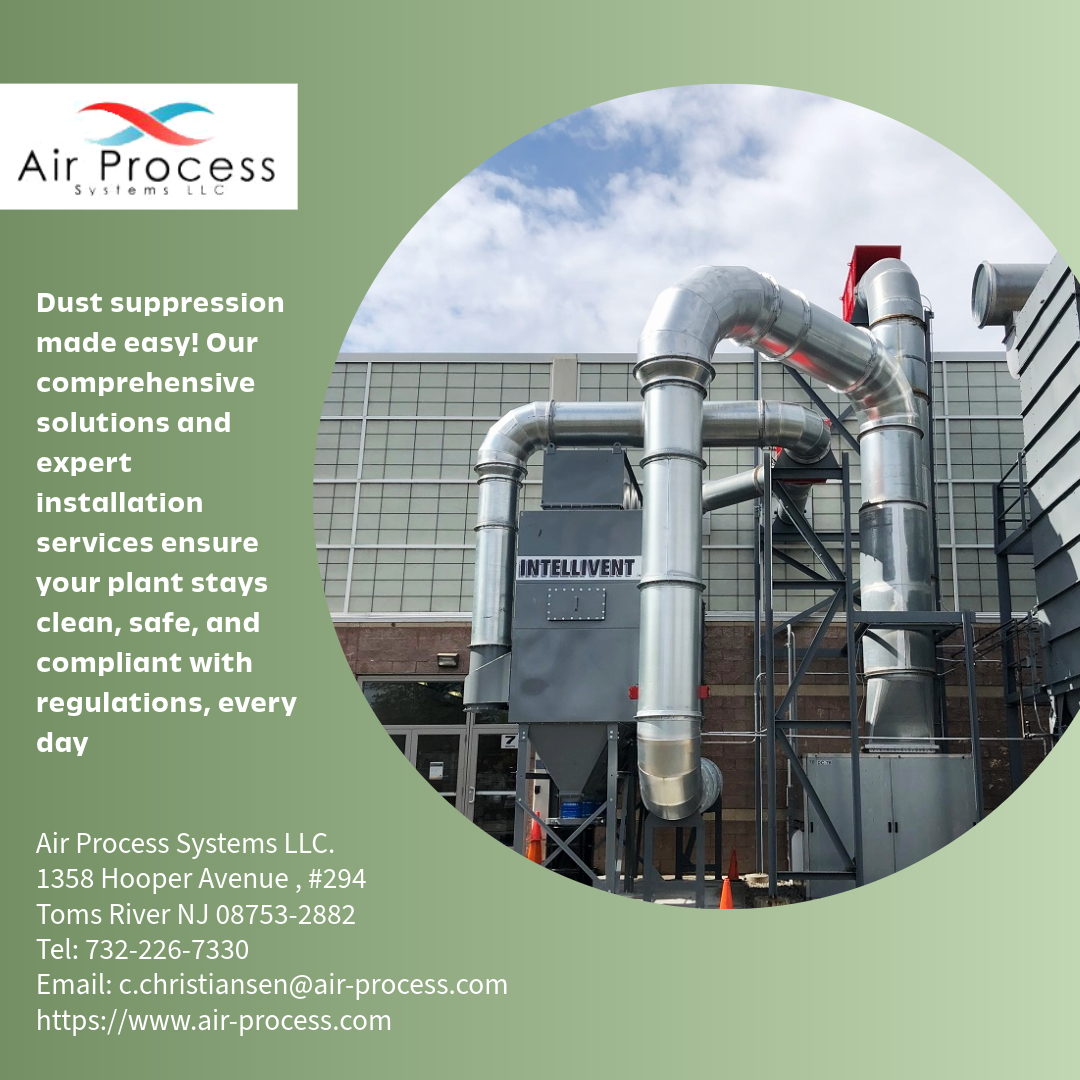 Dust suppression systems are engineered to control airborne particles at the source. Air Process Systems uses a combination of pumping stations, piping, spray assemblies, and specialized nozzles to create an ultra‑fine vapor mist. This mist binds with dust particles, making them heavier than air so they settle instead of remaining suspended. Their proprietary nozzle technology uses compressed air and water to generate droplets as small as one micron, dramatically increasing dust capture efficiency. This approach minimizes water usage while maximizing dust control performance.
The Science Behind Ultra‑Fine Droplet Technology
Air Process Systems’ nozzles rely on high‑energy shock waves created when compressed air impacts a resonator at the nozzle tip. These shock waves break water into micro‑fine droplets, increasing droplet density and improving the likelihood of dust‑to‑droplet contact. The result is a highly efficient agglomeration process that outperforms traditional liquid‑only spray systems. This technology is especially effective in industries such as mining, quarrying, material handling, and manufacturing, where dust levels can be severe and continuous.
Key Benefits of Advanced Dust Suppression
Modern dust suppression systems offer several advantages over older methods. Air Process Systems’ solutions provide greater efficiency in settling airborne particles, reduced water consumption, and improved product dryness due to the ultra‑fine droplet size. These systems are suitable for a wide range of materials, including sand, limestone, clay, coal, and other quarried products. By reducing airborne dust, facilities experience fewer equipment failures, lower maintenance costs, and improved worker safety.
Best Practices for Implementing Dust Suppression Systems
Successful implementation begins with understanding your facility’s unique dust‑producing processes. Air Process Systems offers full system design responsibility, ensuring that each installation is tailored to the specific needs of the operation. From screening and mixing to conveying and dumping, each application requires a customized approach to maximize dust control. Proper planning, installation, and integration are essential for achieving long‑term performance and compliance with environmental and safety standards.
Conducting a Thorough Site Assessment
Before installing a dust suppression system, it’s important to evaluate the facility layout, dust sources, and airflow patterns. Air Process Systems’ experienced professionals perform on‑site assessments to identify problem areas and determine the most effective nozzle placement and system configuration. This ensures that the system targets dust at its origin, reducing the need for excessive water or additional filtration equipment. A detailed assessment also helps prevent overspray, equipment interference, and unnecessary energy consumption.
Choosing the Right Nozzle and System Design
Not all dust suppression systems are created equal. Air Process Systems’ resonator‑based nozzles provide superior droplet size and density compared to standard spray nozzles. Selecting the correct nozzle type, spray angle, and pressure settings is crucial for achieving optimal performance. The system design should also account for water supply, compressed air availability, and control mechanisms. Automated controls can further enhance efficiency by adjusting spray output based on real‑time dust levels or production activity.
Integrating Dust Suppression with Existing Operations
Dust suppression systems must work seamlessly with existing equipment and processes. Air Process Systems provides rigging, erecting, and installation services to ensure proper integration. Their team coordinates with facility managers to minimize downtime and maintain safety during installation. Proper integration also includes connecting the system to control panels, automation components, and monitoring devices. This ensures that dust suppression becomes a natural part of daily operations rather than an added burden.
Maintenance Tips for Long‑Term System Performance
Regular maintenance is essential for keeping dust suppression systems operating at peak efficiency. Air Process Systems offers comprehensive maintenance services, including inspections, leak testing, repairs, and component replacement. Their mobile field team is equipped to handle challenging environments and provide fast, reliable service. Proper maintenance not only extends the life of the system but also prevents hazardous emissions, production delays, and costly equipment failures.
Routine Inspections and Performance Monitoring
Scheduled inspections help identify potential issues before they escalate. Air Process Systems checks key performance items such as nozzle condition, pressure levels, water flow, and system alignment. Monitoring these factors ensures consistent droplet size and spray coverage. Regular inspections also help maintain compliance with OSHA and EPA standards by preventing dust levels from exceeding allowable limits. Keeping detailed records of inspections and adjustments helps track system performance over time.
Cleaning and Replacing Nozzles
Nozzles are the heart of any dust suppression system, and keeping them clean is essential. Over time, mineral deposits, debris, or material buildup can reduce spray efficiency. Air Process Systems provides cleaning, repair, and replacement services to ensure nozzles continue producing ultra‑fine droplets. Replacing worn or damaged nozzles prevents uneven spray patterns and maintains optimal dust capture. Proper nozzle maintenance also reduces water waste and energy consumption.
Addressing System Leaks and Component Wear
Leaks in piping, fittings, or valves can significantly reduce system performance. Air Process Systems offers leak detection and repair services as part of their maintenance program. Their technicians also handle welding, caulking, solenoid rebuilding, and air line replacement. Addressing these issues promptly prevents pressure loss, water waste, and uneven spray distribution. Regular maintenance ensures the system remains reliable and efficient, even in demanding industrial environments.
Implementing and maintaining a dust suppression system is essential for improving air quality, protecting equipment, and ensuring worker safety. Air Process Systems LLC provides industry‑leading solutions that combine advanced nozzle technology, custom system design, and comprehensive maintenance services. By following best practices for installation and upkeep, facilities can achieve long‑term dust control and operational efficiency.
Visit our website for more information: Air Process Systems LLC.
